Announcing the Results of the Inaugural Matthew Lanyon Poetry Prize
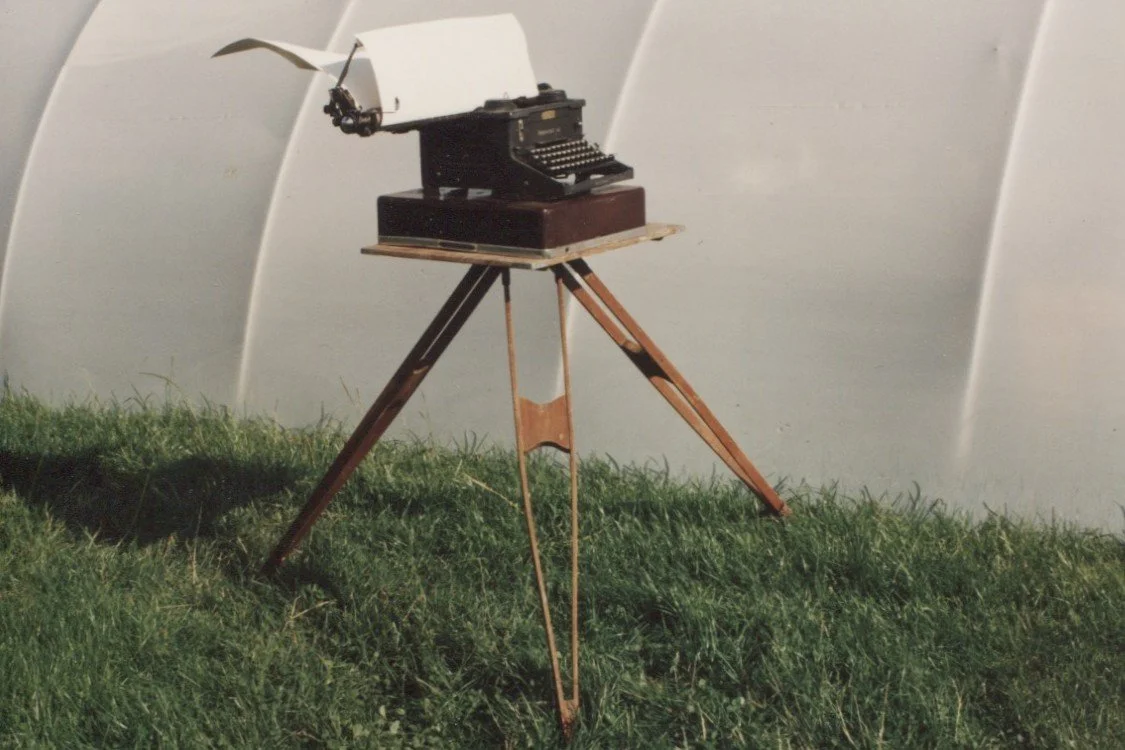
Matthew Lanyon, Typewriter, photograph print
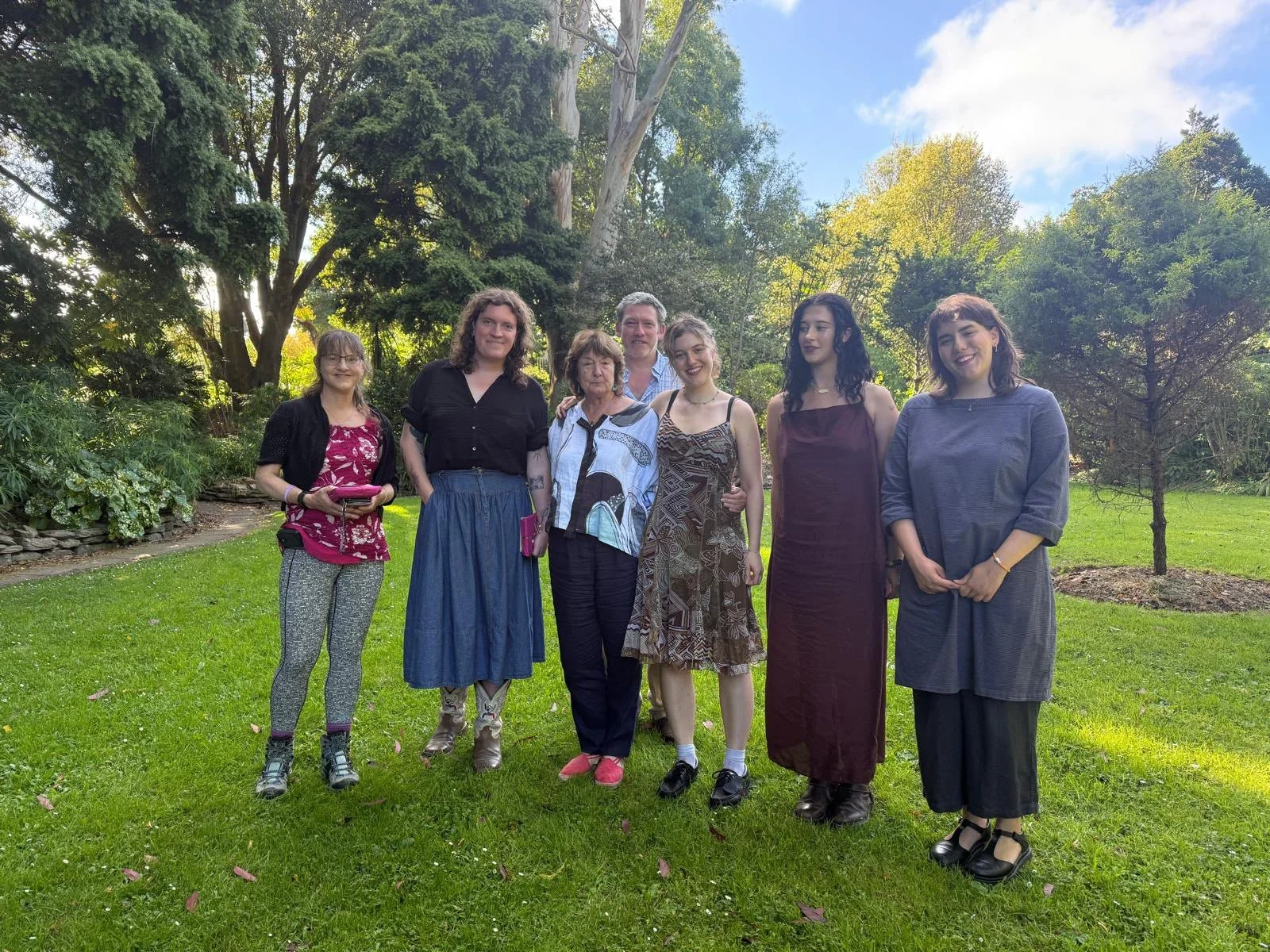
Matthew Lanyon Poetry Prize winners, runners up, and judges, Festival of Matthew Lanyon
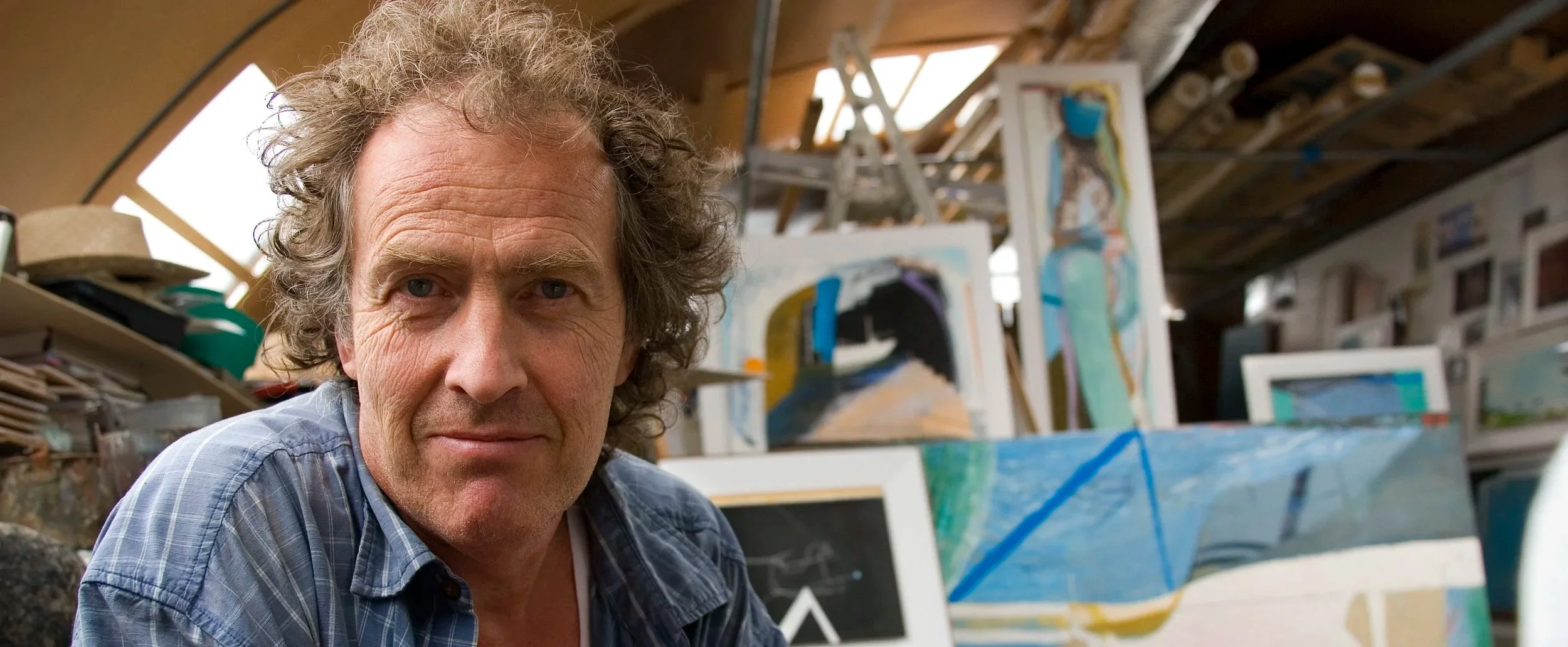
In March 2026, the Matthew Lanyon Archive launched a brand new national poetry prize, to celebrate the life and creative legacy of Matthew Lanyon (1951-2016). The inaugural prize had a tremendous response of over 600 entries, from poets new and experienced based all over the UK. Our sincere thanks to everyone who entered!
We are now delighted to announce the winning and shortlisted poets, chosen by Luke Thompson, Judith Lanyon and Zelda Cahill-Patten.
Congratulations to:
1st prize – Olive Mills, ‘What I am Doing at the Bottom of the Ocean’
Runner-up – Gayathiri Kamalakanthan,‘If a poem is a gesture toward home’
Cornish prize – Eleanor Fullwood, ‘Fishbone, or cause/ effect’
Highly commended:
Emily Breeds, ‘Returning’
Sarah James, ‘trawling Aquatica III, 2094’
Harper Walton, ‘Winchester Geese’
The winning and shortlisted poets were announced in person during the Festival of Matthew Lanyon, held at Falmouth University on 3rd and 4th July 2026. All shortlisted poets were invited to read. We’d like to thank everyone who attended the Poetry Prize Event and joined us in celebrating these fantastic writers.
Judge’s Comment from Judith Lanyon:
The theme was the Archaeology of Tomorrow and it seems to have opened the floodgates to all the feelings and fears people have about the future; so much tenderness is in the poems too, for place and humanity. I wish we could share them all.
Judge’s Comment from Luke Thompson:
I’d like to thank all entrants for sending us their work. The response was incredible and the quality of both the national and regional entries was overwhelming.
We are pleased to publish the shortlisted poems below.
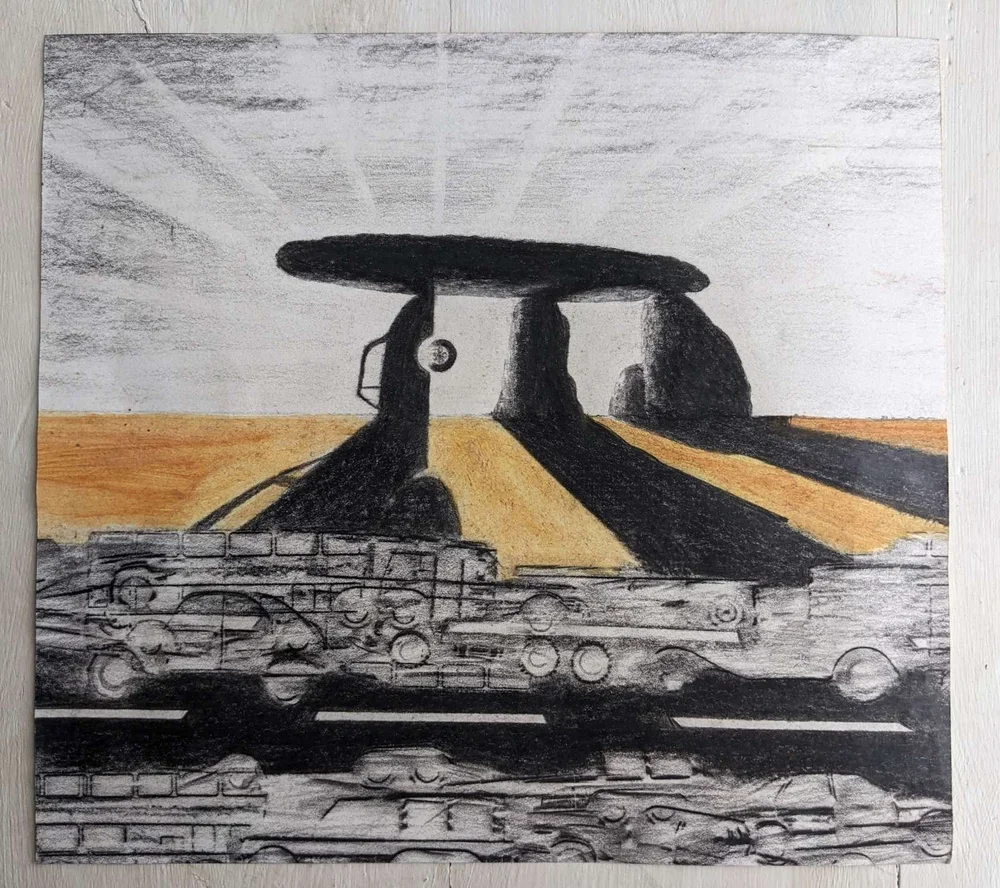
Matthew Lanyon, Lanyon Quoit, pencil on paper
Olive Mills
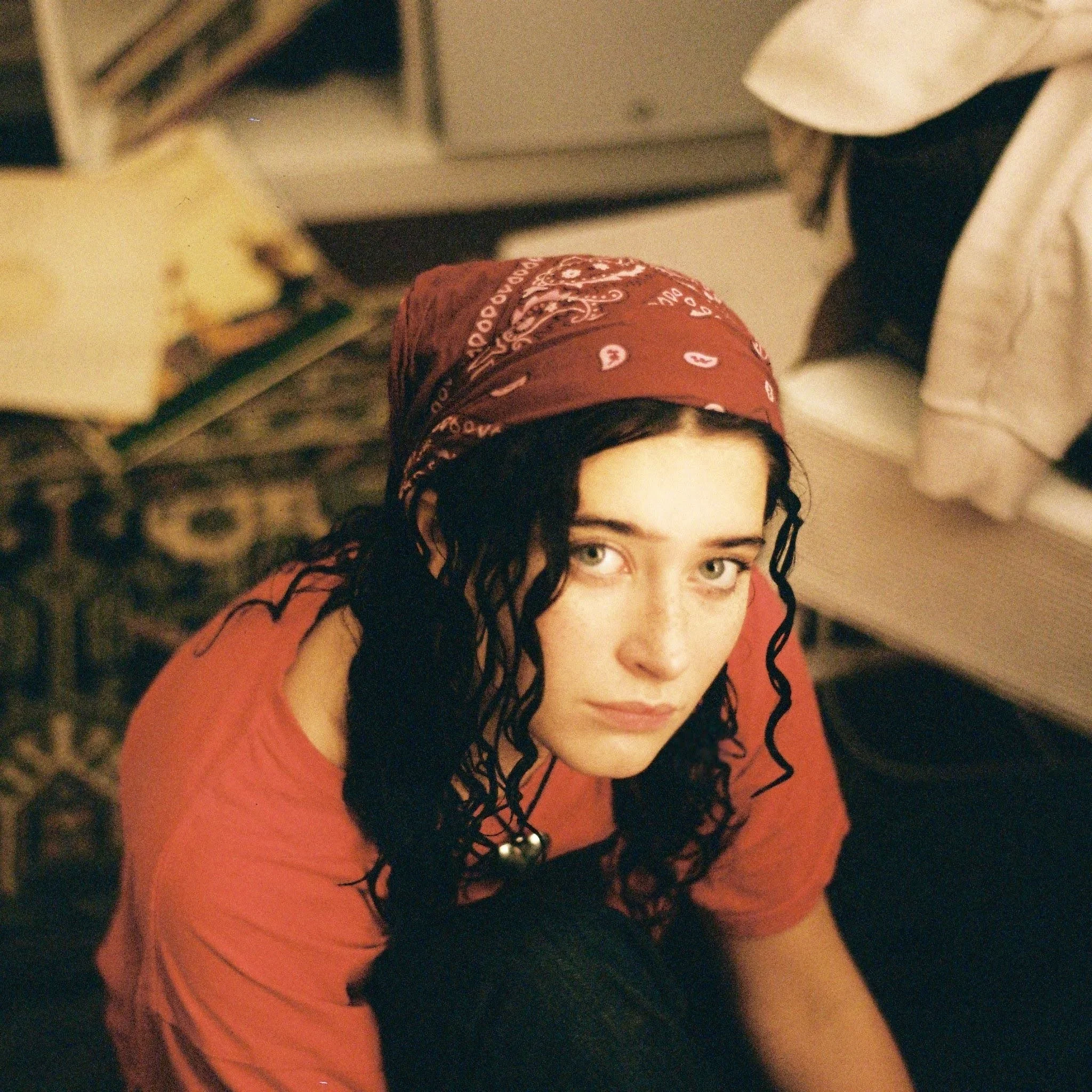
What the judges said: Our winner was immediately arresting. It struck us all right away, but it is also a poem that swells and contracts, almost tidally, when you return to it. It’s a kind of broken sonnet, with the physical body and the physical presence or awareness of the body – its position, its shape, its composition, even its purpose – at the centre of the opening proposition. The richness of the poem – the poise and control and surprise of the poem – were intoxicating, holding the reader from the opening line, submerging us in language and curiosity, before turning us away, gesturing elsewhere, ultimately gesturing back to the beginning.
Olive Mills is a Cornish writer and poet. Her work often explores landscape, ritual, and the sacred body. She is a 2026 Charles Causley Trust Poet in Residence, and a recipient of the Young and Talented Creative Writing Award. Her work has been published in Seedlings, Thread Lit Mag, and The Mays Anthology, among others. Aside from writing, she can be found swimming, dancing, or spending an inordinately long time sitting outside various cafés.
Gayathiri Kamalakanthan
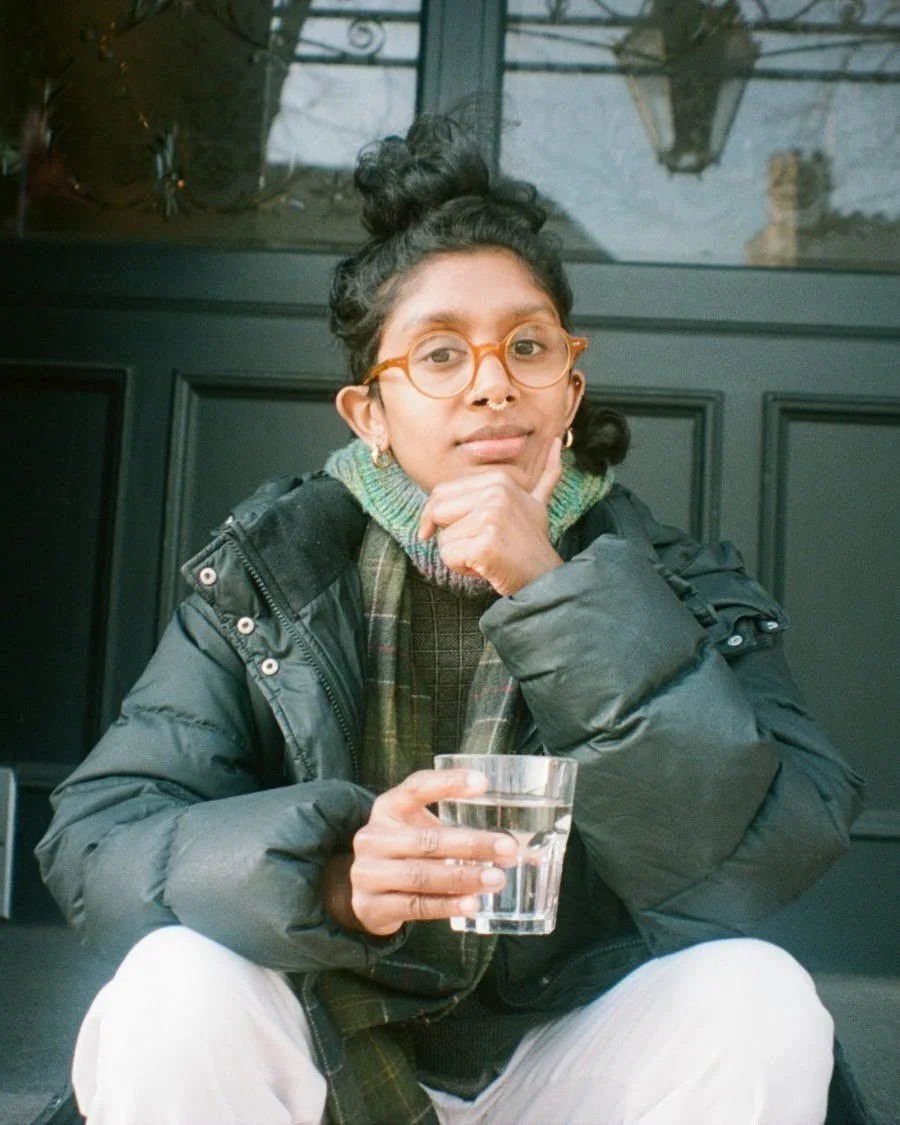
What the judges said: Gayathiri used an attractive and immediately effective form: the duplex of Jericho Brown. As Brown says, the duplex is 'a ghazal that is also a sonnet that is also a blues poem of 14 lines', with a set of rules embracing repetition and development of phrasing and themes. We loved Gayathiri's play with this form, which opens with a domestic scene and gradually abstracts us away.
Gayathiri Kamalakanthan is a Tamil writer based in London. They’re interested in how language shapes belonging and how we might use it to build freer futures. Their play Period Parrrty is a trans Tamil rom-com and opened at Soho Theatre in 2025. Their debut novel-in-verse, Bad Queer, is out with Faber.
Eleanor Fullwood
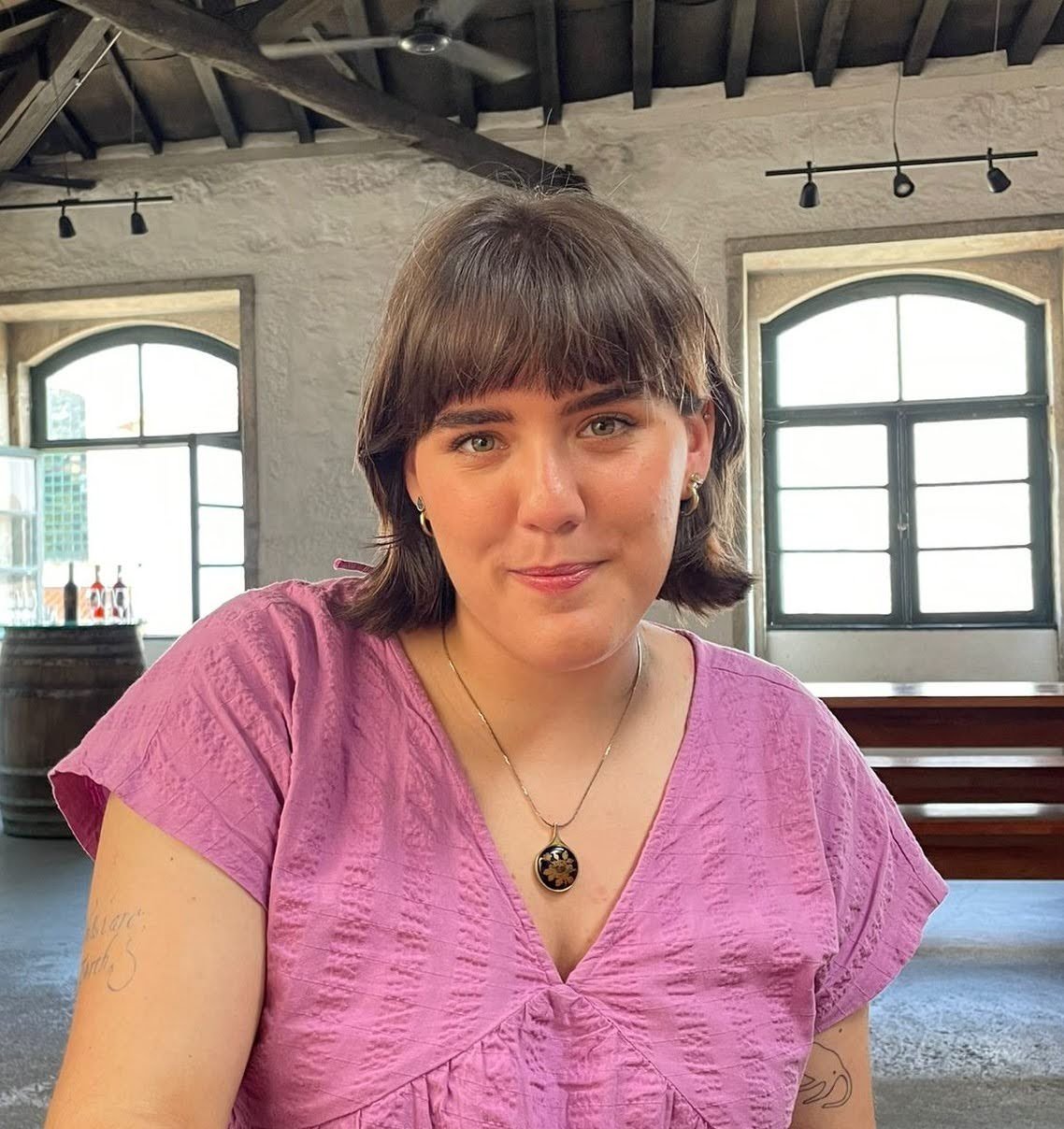
What the judges said: There is an attractive surrealism to this poem right from the beginning, but also an incredible clarity of imagery. This is an evocative poem and full of colour (especially reds – ‘plum’, ‘red-top’, ‘scarlet’ and rust), with the introduction of the competition’s themes arriving in the ‘hamster graveyard’.
Eleanor Fullwood is a poet and history student from Bodmin, Cornwall. She co-founded Bodzine, a zine collective which explores Cornish heritage and celebrates young creativity. She won the Gorsedh Kernow Young People’s Award in 2019 for a short play called Fishing and recently won the Inspiring Voices Poetry Festival 2026 competition with her poem Browjans. She loves collage, crochet and thinking about birds.
Emily Breeds
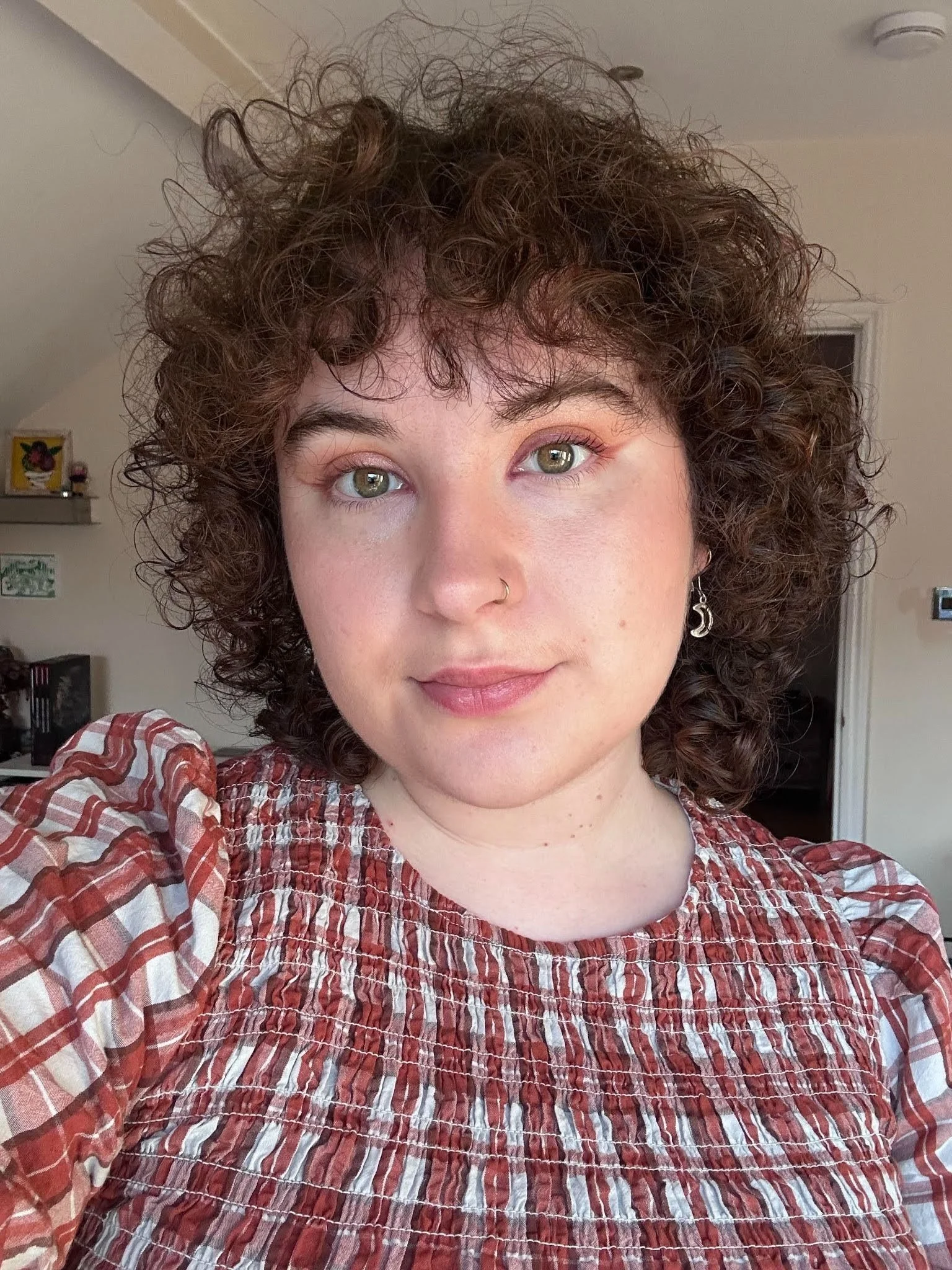
What the judges said: 'Returning' is a prose poem with musicality and an emotional narrative. It read almost like a short prose ode, although on first read you can simply follow the story, the love and yearning, and those sharp, surprising, resonating images.
Emily Breeds was born and raised in Wiltshire, and is now based in Gloucester. She has won the BBC Proms Poetry Competition 2017, multiple Young Poets Network Challenges, was commended in the Foyle Young Poet of the Year Award 2016, and was longlisted for the National Poetry Competition in 2018 and 2024. She represented Birmingham at UniSlam 2021, and coached the team to victory in 2022.
Sarah James
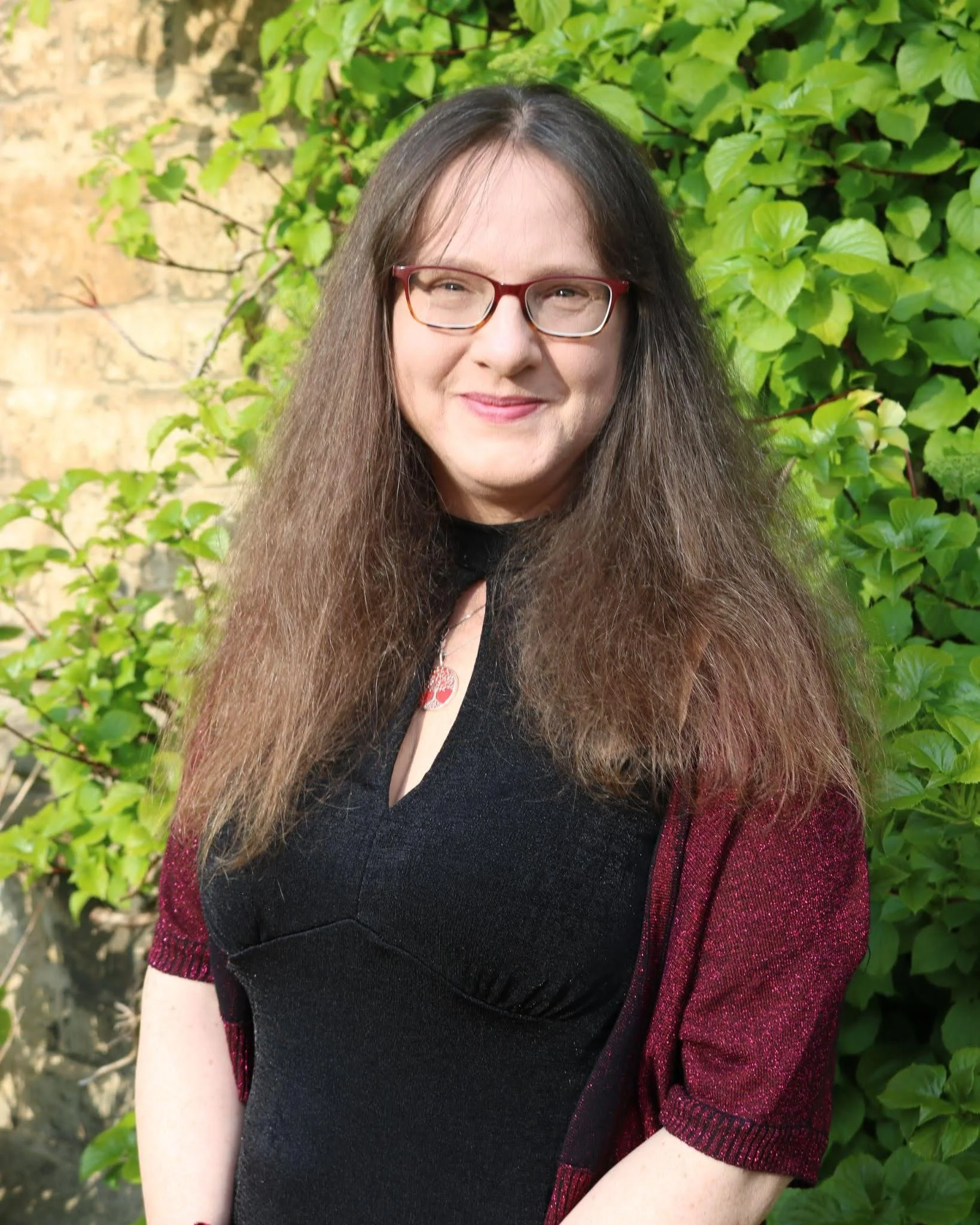
What the judges said: This is a kind of apocalyptic vignette, guiding us around a possible future. This is a visually strong and immersive poem, but there is little sensual language in this technologic future. There are no sounds, no taste, no smells, nothing haptic. For a moment we might almost think that the narrator is the submarine itself. This is a poem to be read aloud - a beautifully composed piece.
Sarah James is a prize-winning poet, fiction writer, journalist and photographer. Her latest collection is the art-inspired Darling Blue (Indigo Dreams, 2025), which won the Geoff Stevens Memorial Poetry Prize 2024.
Harper Walton
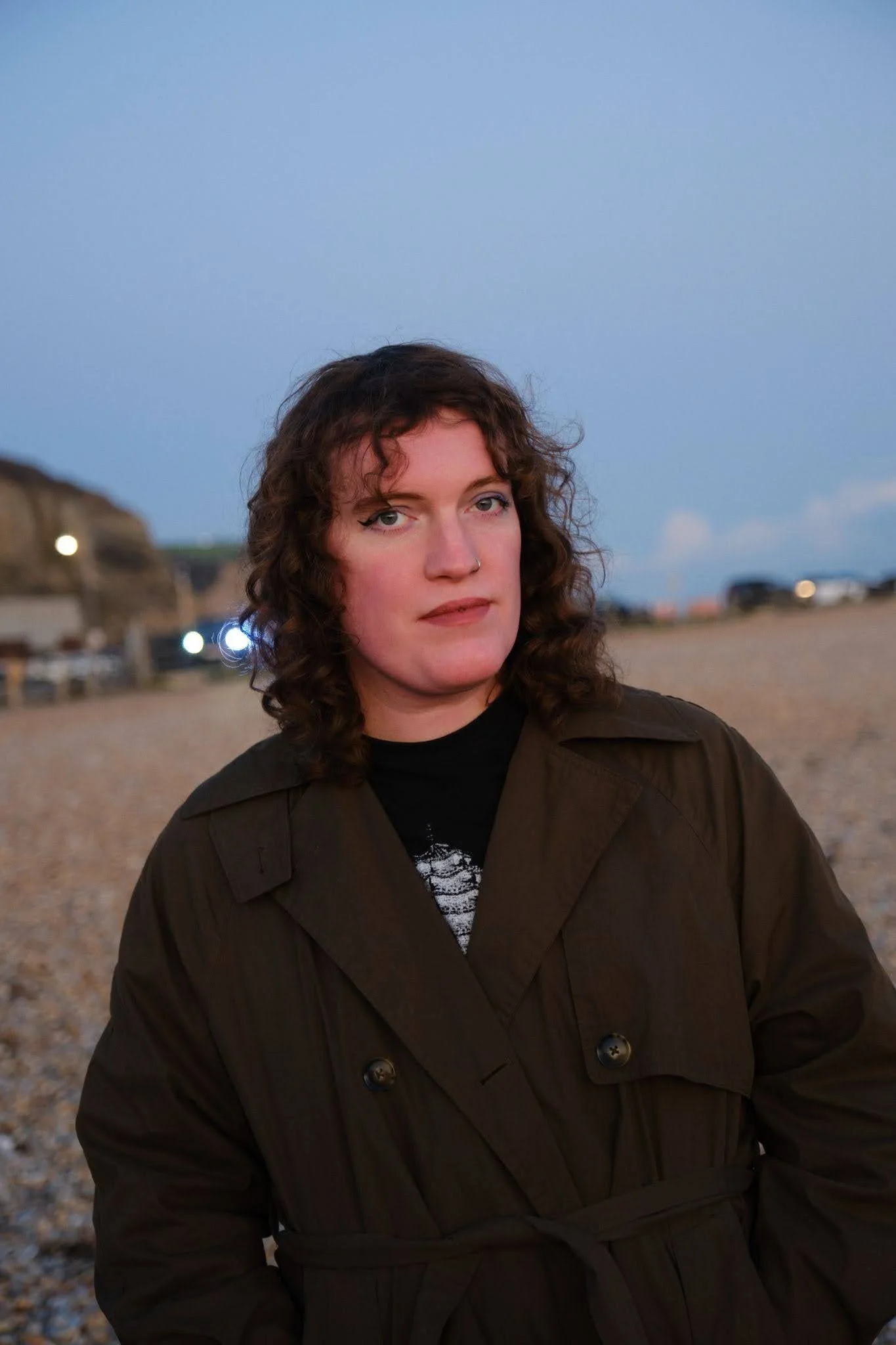
What the judges said: This poem struck us for its layering of intimacy, place and history as two lovers walk through a cemetery. Its title refers back to the Medieval era and to a site of legitimised and regulated prostitution, the ‘geese’ being a name for the sex workers of this area. As the couple makes the ground ‘sacred’, so too is the site itself reclaimed.
Harper Walton is the author of Common Only in Name (Porters Books), Midnight Movies (Femmesocial Press) and the editor of Carnival at the End of the World (Buoy Press). Their work has been featured by 1883 Magazine, Whitechapel Gallery, Venice Architecture Biennale and more.
What I am Doing at the Bottom of the Ocean
I am finally giving the sand what it always wanted,
which is to get inside each of my crevices. Like the oyster,
I am ingesting in the name of beauty. So far I have swallowed
cuttlefish bones, a tin soldier, an ELF bar, a blue-bottle jellyfish,
and five plastic spoons. I’m going to eat that dogfish too,
and turn its teeth pearl-white in my nacre belly.
I am making friends with the local squid. I am developing the posture
of a shrimp. I am losing my earth-side vocabulary and I think
Ozempic, Daily Mail, and five year plan will be the next to go.
I am only thinking, sometimes, of my mother.
When the sun cuts through the water and warms the floor,
I remember the feeling of my cheek against the window of our family car.
I remember her voice, or perhaps just the radio.
Download Olive’s poem here
If a poem is a gesture toward home
after Jericho Brown
can a poem be the thing itself? Imagine
a home in Eelam. A kitchen
in a home in Eelam. A mother and daughter, making
a meal. The two of them together, washing and drying
not wishing and dying. The two of them
around a table, not slicing and dicing for Eelam
but slicing and dicing in Eelam, for māmis and māmās
who will come and eat today and tomorrow
from all over Eelam. Today and tomorrow in Eelam,
in Eelam light rain on the skins of mangoes,
on trees of mango in the garden of Eelam. No rain
of bullets but poems and poems of home. Of Eelam.
If a poem is a gesture toward home,
can the poem be the thing itself?
Download Gayathiri’s poem here
Fishbone,
or cause / effect
i.
opening the fridge door to five fishes
overhanging the plum-jacquard trim
of a dinner plate, forked tails catching
the lid of our red-top milk / half-asleep,
striped mackerels drink my cereal dregs
ii.
opening their stomachs over the kitchen sink,
dad remarking upon the diet of mackerels
missing heads – eating fish smaller than themselves,
sometimes their young – & lifting to my nose
a puckered fish-child / an imperfect nesting doll
iii.
opening the back door to the hot-reek
of the smoker, dad stoking wooden chips
& plucking at the ripe brambles choking
the white-star magnolia. the salt steaming
out of the fishes / rusting pipe-cleaner
crosses in the hamster graveyard
iv.
opening the foil parcels with my fingers
hopping over the gold-singe, seeing my fish
its sides brindled & crisped. scarlet blackberries
spilling their gore. dad deftly lifting spine,
and spine again, splaying the white flesh
between fork tines on slabs of wholemeal,
buttered bread. the bread meaning there is
no risk of spindly ribs sticking in my throat,
meaning / you cannot bury swallowed bones
Download Eleanor’s poem here
Returning
Maybe it will all be ok. Maybe one day you will be sitting with your love eating tiramisu out of a plastic pot. Consider it: you have dreams again. You forget what sharpness feels like, and love is as soft as a rabbit’s ear. You foster plants, and then animals. You are no longer afraid of keeping things alive. It’s now cool that you like rock music. You find your missing cat, and he waits on the step for you, coated in sunset. Your childhood friend returns from Australia, and she takes you by the hand and leads you to the tadpole pond in her old house. Maybe no one lived there after her. Maybe it still holds that old coffee and paprika smell. Maybe she leads you through the weeds, towards a song of croaking, and says look how much they grew.
Download Emily’s poem here
trawling Aquatica III, 2094
transmission 5976z: reports of a last dolphin
by the lower reaches appear to be unfounded
mostly i drift past the streets where subterranean
gills gush air strained through fishless ocean
not the Rheic’s stranded lake that layered
Bude Fish in the shale eons of years before us
the great global warming that wiped out
land & life beyond underwater domes
our whale-carcass slums have garbage-patch rooves
& seaweed-strung curtains
night is the new day – i put on my aluminium skin
plug in & recharge my lungs
when the murk passes its peak
my patrol begins trawling for flickers of life
i glide through my shift neon-lit
circuits pre-programmed to sync with seascrapers’
breathing in out in time
to the ascendant brine’s arrhythmic tides
now and then something ripples inside
that i’m not equipped to process
disturbed silt settles behind me
slowly compacting around this city’s bones
Download Sarah’s poem here
Winchester Geese
in the (paupers’) graveyard, you admit
you have a (fat) crush on me
making this (unconsecrated) ground
(for the first time in its history) sacred
as the bones of (15,000) ladies (of the night)
rest beneath our (living) feet
I (almost) reach out to touch your cheek
curved and smooth as a sun-warmed seashell
a pyramid is missing one of its faces
so we argue over its significance
you’re uncomfortable (like something
has escaped from its insides)
but I see it more as an invitation
open and universal, a (dark) forever home
(full of boulders and weeds)
a doorway (that can never be closed)
as we stroll past a (syphilitic) skull
(sculpted from 2p pieces)
I admire your leather biker (overkill
in this pre-summer heatwave)
(in the background) the Shard rises above it all
you riff that it’s a ceremonial pyramid
(for the tallest, thinnest twink in history)
and I’m annoyed (I couldn’t think
of something that funny)
before we can leave, we’re accosted by a gang
(of mini stone buddhas with red crocheted bonnets)
silently, they offer (colourless) orbs towards us
eyes closed (in eternal peace)
Download Harper’s poem here
The Matthew Lanyon Poetry Prize was co-founded by Judith Lanyon and Zelda Cahill-Patten in 2026. The inaugural competition was judged by Luke Thompson, Judith Lanyon and Zelda Cahill-Patten. The prize administrator for 2026 was Zelda Cahill-Patten.